Aztec Network
26 Apr
## min read

Layer Cake: A guide to Layer 2s

Navigate the complexities of layer 2 solutions with Aztec's comprehensive guide, demystifying blockchain technology layers.

Share
Written by
Zac Williamson
Edited by

Hello!

I’m Zac, the CEO of Aztec. We’re the inventors of the Plonk universal ZK-SNARK and zk.money, the world’s first private rollup and one of the new layer 2 protocols that have recently been deployed to Ethereum.

The layer 2 landscape is becoming a truly fascinating place to explore as multiple teams have been converting vision into reality and deploying their tech to the Ethereum mainnet.

It’s also a bit of a minefield to navigate if you’re not plugged into the ecosystem and can work your way through the jargon.

Unfortunately, most people in a position to explain layer 2s have skin in the game and have some biases towards certain technologies (i.e. the ones their protocol uses!).

So what makes me different? Absolutely nothing! But at least I’ll tell you that upfront instead of pretending to be impartial, eh?

Still, I’ll do my best to give you a balanced overview. The world of blockchain-based cryptography/scaling is a small one and the teams that are pushing the boundaries all deserve respect for what they do. So I guess we should get into it!

What is a layer 2 and why are they important?

The transaction throughput of Eth 1.0 is limited which has led to extremely high transaction costs.The main cost of Eth transactions come from:

  • Cost of storage changes
  • Cost of transaction data
  • Cost of computation

Layer 2s delegate one or more of the above to a secondary network running on top of Ethereum.There are traditionally two categories of layer 2’s each with its own security requirements and trade-offs: optimistic rollups and zk rollups. Aztec is defining the third category, private rollups.

Optimistic Rollups

An optimistic rollup acts much like a miniature version of the Ethereum blockchain. It acts as its own network that hosts smart contracts and transactions.

Periodically, the optimistic rollup will broadcast transaction blocks to a layer 1 smart contract. The ‘blocks’ contains the complete transaction data of every transaction in the block, but nothing else. The layer 1 smart contract does not perform any computation or make any storage updates. This massively reduces the cost of publishing a block.

These rollups are ‘optimistic’ because they assume that every transaction is correct by default — they are not checked directly by a layer 1 smart contract.

Instead, if a user thinks a transaction is incorrect (e.g. double-spending), they can post a “fraud-proof”. The layer 1 smart contract can use the rollup’s published block data to validate the correctness of the alleged fraudulent transaction.

This is very expensive but only has to be done when bad behavior is suspected.

If bad behavior is discovered, the entity that published the optimistic rollup block (typically called a validator) loses some cryptocurrency they have staked.

Optimistic rollups rely on this economic consensus to ensure transactions are correct.

Withdrawal times from optimistic rollups are typically long (e.g. 1 week). This is because once a transaction has been published, one must wait to see if anybody alleges bad behavior and posts one of these fraud proofs (this is a bit like the awkward silence part in a wedding when the priest says “if anybody objects…”)
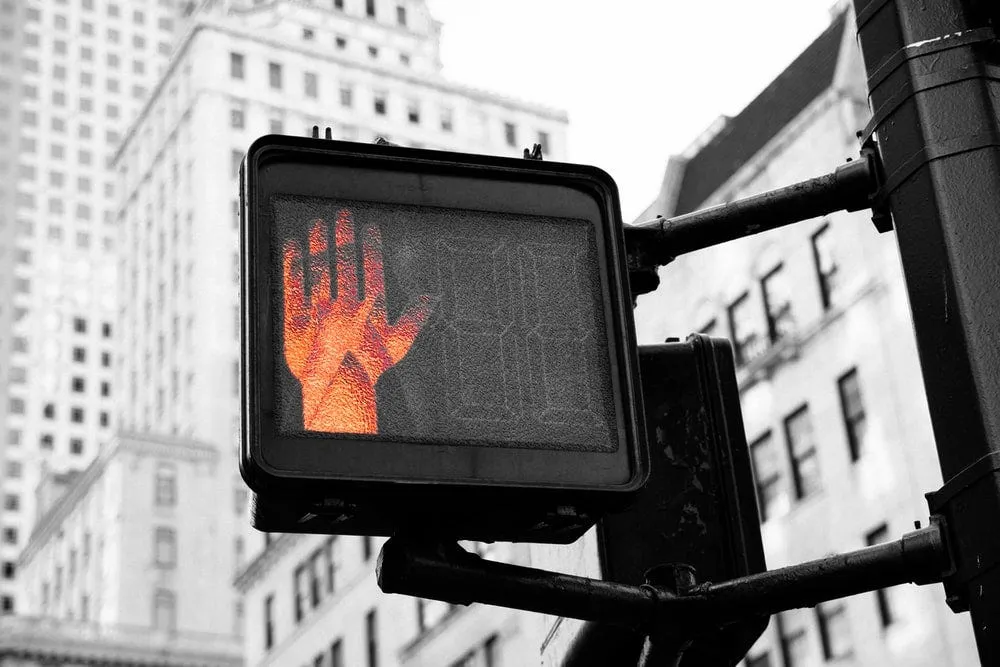
Waiting for fraud proofs drastically slows withdrawal times

The main cost of transactions on an optimistic rollup comes from the cost of publishing transaction data on-chain. This data availability problem is shared by all rollups, optimistic or otherwise. In order to prevent funds from being frozen, users need access to all of the rollup’s transaction data. Either it gets published onto layer 1, or extra trust assumptions are required (e.g. trust that some sidechain will make this data available).

At the time of writing, if the rollup does not publish its transaction data on-chain this implies that you are relying on a centralized service to not freeze your funds.

Pros:

  • Feature-rich. Can copy Eth 1.0 architecture and support smart contract
  • Easier to build and deploy vs zk-rollups

Cons:

  • Slow exit times. Need to wait ~1 week between tx execution and tx considered ‘safe’ due to the lack of a fraud-proof
  • Slow exit times can be mitigated with underwriters (entities that allow instant withdrawals by taking a small fee in lieu of risk…)

ZK Rollups

Computation and storage handled by a secondary network.

L2 broadcasts transaction data to mainnet along with a proof of correctness. A mathematical proof that the transactions are correct. i.e. the L2 transactions are rolled up into a single mega-transaction that is broadcast to a L1 smart contract.

The ‘zk’ in zk rollups stands for ‘zero knowledge’. However, zk rollups are not private — all transactions are public by default like optimistic rollups. The ‘zk’ comes from the fact that the proof of correctness is typically produced by a zero-knowledge proving system (e.g. a ZK-SNARK or a ZK-STARK).

The upside to this is that the cost of storage updates and computation is removed from Ethereum. There is no need to optimistically assume the transactions are correct, if the proof is valid you can know that the transactions are correct.

This means that withdrawal times are much faster vs optimistic rollups and fewer trust assumptions are required.

The white elephant in the room is that zero-knowledge proofs add a massive computational overhead to a transaction.

Creating a zero-knowledge proof of a computation is approximately 1,000,000 times slower than running the computation directly! This is a rough estimation that will vary depending on the computation in question, but is accurate for the types of computations found in Solidity smart contracts.

ZK rollups handle this by delegating proof construction to third parties with a lot of computing resources, “rollup providers”. Users will be dependent on these third-party services to create transactions for them. Rollup providers can censor or front-run transactions, much like Ethereum miners. The more computing power required, the fewer rollup providers are likely to be available, so the censorship problem must be adequately handled by the protocol architecture.

This computation overhead presents problems when it comes to porting smart contracts to the L2. Full EVM compatibility is the goal, but this 1,000,000 factor slowdown must be handled. The EVM is extremely SNARK-unfriendly because of its 256-bit word size and native support for SHA3 and other SNARK-unfriendly hashing algorithms. Even delegating proof computation to a third party with significant computation resources is likely insufficient. One possible solution is etching zkSNARK prover algorithms directly into silicon via FPGAs or ASICs. Rollup providers will require this hardware to construct proofs.
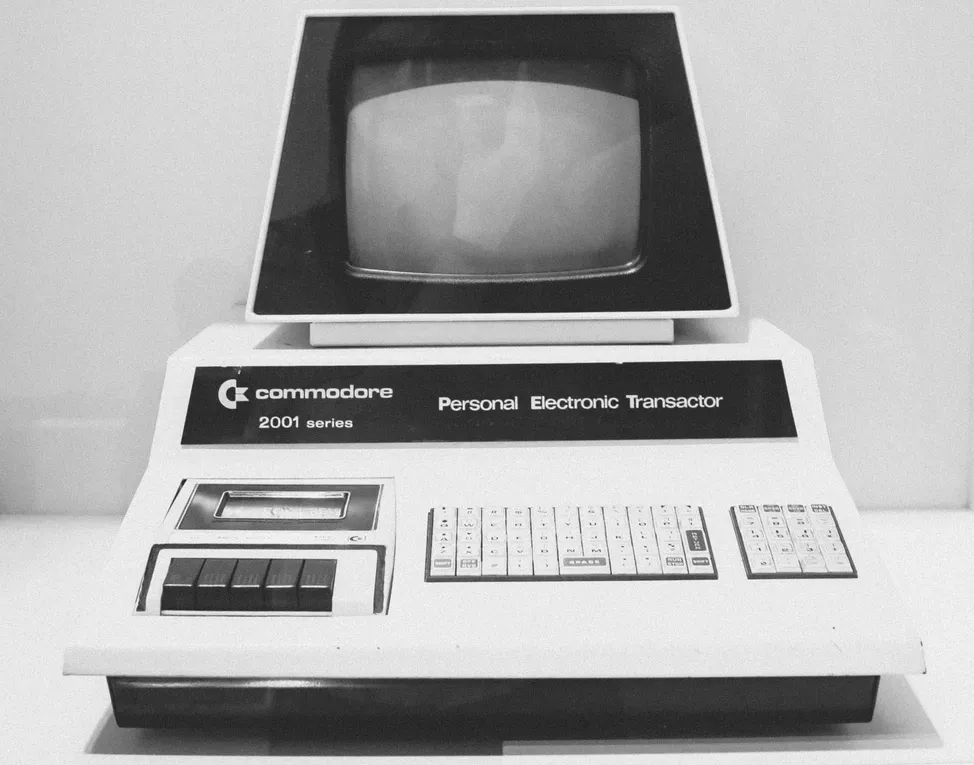
ZK proof construction is much slower than running a normal program. Our Plonk and Plookup research has sped up SNARKs by over an order of magnitude, but ZK-rollups still have performance problems compared to optimistic rollups.

Typically, SNARK and STARK programming languages have to accommodate the inefficiencies of the underlying proving system. Typically these languages have difficulties implementing variable-length loops and dynamic memory access (think dynamic arrays and vectors). Our latest Plookup research mitigates some of these problems, but not all of them.

This means that the zk rollup may require developers to port their contracts into a custom language (e.g. Starkware’s Cairo).

For zk rollups that do not aim for full EVM compatibility, one upside is cheaper transactions. Without needing to conform to EVM semantics, it is possible to reduce the amount of data broadcast per basic transaction. The Hermes network is an example of such a rollup.

Pros:

  • Possibly cheaper transactions than optimistic rollups
  • No need for fraud proofs, very fast withdrawal times

Cons:

  • Slower feature velocity than optimistic rollups
  • Dependent on third-party proof constructors with custom hardware
  • May require custom programming languages with limited features

Private Rollups

Aztec launched its private rollup on mainnet in March 2021. You can wrap your Eth in a privacy shield and make private transactions using our online privacy wallet zk.money.

Private rollups use similar tech to zk rollups but are a very different beast. The private rollup is architected to provide strong privacy guarantees to every user of the L2. Users hold their funds anonymously. When performing transactions, the sender and recipient are anonymous and the value being transferred is encrypted.

We use a state-of-the-art zero-knowledge proving system, Plonk, to do this. We invented Plonk in 2019 and it is rapidly becoming an industry-standard amongst teams using zero-knowledge proofs and building on blockchains.

Enabling privacy by design requires a radically different rollup architecture to a zk-rollup. We went with a privacy-first approach because we know that it is very difficult to retrofit programmable privacy onto a public L2 without damaging the user experience or requiring a drastic protocol re-architecture.

Current Ethereum-based privacy solutions are mixers. They can be used to anonymize a user’s holdings but little else. Our full vision for a private layer 2 encompasses much more:

  • Fully programmable private smart contracts. Private currencies can have advanced transaction logic
  • Private ownership of NFTs
  • NFTs with properties that are hidden to all but the owner
  • Anti-money-laundering and know-your-client checks can be programmed directly into private tokens/dApps (e.g. KYC tokens — you can trade with trusted counterparties without knowing their identity)
  • Private DeFi! This is a huge topic that deserves its own article (coming soon…)

This is only possible by architecting the protocol to put privacy first. The transaction and state models for the protocol must be designed to be compatible with privacy.

Pros

  • Transactions are private. User’s financial activity cannot be analyzed by third parties
  • Rollup providers cannot censor or front-run individual transactions. For the rollup provider, every tx looks like a list of random numbers
  • No need for fraud proofs, very fast withdrawal times
  • Users can unilaterally withdraw without assistance from a third party to perform computation

Cons

  • More expensive than public L2s (but cheaper than main-net), until data availability solutions/Eth 2.0 come online
  • Users must construct private transaction zk proofs locally. No delegating to a 3rd party. The zk-proving system must be lightning fast to achieve this
  • Slower feature velocity than a zk rollup or optimistic rollup due to client-side proof construction. Programmability can be achieved, but full EVM compatibility is a while off
  • The state model is different. The value must be represented in bitcoin-style UTXO ‘notes’ and not via Ethereum’s account model. This can be abstracted away at the application layer.

Sorting the signal from the noise

The L2 landscape is competitive and there is an enormous pressure to launch and gain users before one's competitors.

This can lead to corners being cut and additional trust assumptions being added, that are obscured from users.The biggest issue right now is that of data availability.

If the L2 does not publish its transaction data on-chain, the L2 controllers can freeze user’s funds.

Every team working on L2s is striving to push the boundaries of what is possible with today’s technology. While admirable, this makes it easy to hide protocol flaws in technical jargon.

If you’re thinking about using a layer 2, they should be able to adequately address the following questions:

  • How is the L2 approaching data availability? If their tx cost is <20x of a regular Eth transfer they might not be broadcasting everything on-chain
  • Can a user unilaterally withdraw from the L2 using only the information published on Ethereum?
  • Is there a public technical description of the protocol that third parties can validate?

In addition, for zk rollups and private rollups one should ask the following:

  • Is the on-chain data provably correct? Is all of it being fed into the rollup circuit as public inputs?
  • Is the L2 dependent on centralized compute clusters to create rollups? If so, what is their plan to prevent censorship and front-running? When fully decentralized, how many rollup providers will there likely be?
  • Are the proof construction algorithms publicly viewable and auditable?

The shape of what’s to come

The next 12 months are going to be a profoundly exciting time in the Layer 2 space. The myriad of protocols hitting mainnet is the culmination of years of deep R&D and engineering work from across the industry.

For Aztec’s private rollup, our focus is on pulling programmable private smart contracts into the world. Our flagship Plonk programming language, Noir, is designed to compile high-level programs into heavily optimized ZKSNARK circuits, ones that are fast enough for proof construction to happen in the browser. This tech will be the keystone to our Aztec 3.0 rollup architecture, which will support user-defined circuits created with Noir.

By combining programmable privacy with scaling, we’re adding the last missing link required for truly mainstream adoption of web3 technology. At last, web3 will be able to compete on a level playing field against traditional web2 tech, with strong privacy guarantees as standard. We want to foster a rich ecosystem of private cryptocurrencies and NFTs that interact in a privacy-preserving manner both with DeFi protocols and more traditional financial services.

We’ve demonstrated with zk.money that this is not some wild future tech. We’ve already developed the key technologies required to build this ambitious project, now we’re going to knuckle down and execute on our vision.

Read more
Aztec Network
Aztec Network
30 Jan
xx min read

Aztec Ignition Chain Update

In November 2025, the Aztec Ignition Chain went live as the first decentralized L2 on Ethereum. Since launch, more than 185 operators across 5 continents have joined the network, with 3,400+ sequencers now running. The Ignition Chain is the backbone of the Aztec Network; true end-to-end programmable privacy is only possible when the underlying network is decentralized and permissionless. 

Until now, only participants from the $AZTEC token sale have been able to stake and earn block rewards ahead of Aztec's upcoming Token Generation Event (TGE), but that's about to change. Keep reading for an update on the state of the network and learn how you can spin up your own sequencer or start delegating your tokens to stake once TGE goes live.

Block Production 

The Ignition Chain launched to prove the stability of the consensus layer before the execution environment ships, which will enable privacy-preserving smart contracts. The network has remained healthy, crossing a block height of 75k blocks with zero downtime. That includes navigating Ethereum's major Fusaka upgrade in December 2025 and a governance upgrade to increase the queue speed for joining the sequencer set.

Source: AztecBlocks

Block Rewards

Over 30M $AZTEC tokens have been distributed to sequencers and provers to date. Block rewards go out every epoch (every 32 blocks), with 70% going to sequencers and 30% going to provers for generating block proofs.

If you don't want to run your own node, you can delegate your stake and share in block rewards through the staking dashboard. Note that fractional staking is not currently supported, so you'll need 200k $AZTEC tokens to stake.

Global Participation  

The Ignition Chain launched as a decentralized network from day one. The Aztec Labs and Aztec Foundation teams are not running any sequencers on the network or participating in governance. This is your network.

Anyone who purchased 200k+ tokens in the token sale can stake or delegate their tokens on the staking dashboard. Over 180 operators are now running sequencers, with more joining daily as they enter the sequencer set from the queue. And it's not just sequencers: 50+ provers have joined the permissionless, decentralized prover network to generate block proofs.

These operators span the globe, from solo stakers to data centers, from Australia to Portugal.

Source: Nethermind 

Node Performance

Participating sequencers have maintained a 99%+ attestation rate since network launch, demonstrating strong commitment and network health. Top performers include P2P.org, Nethermind, and ZKV. You can see all block activity and staker performance on the Dashtec dashboard. 

How to Join the Network 

On January 26th, 2026, the community passed a governance proposal for TGE. This makes tokens tradable and unlocks the AZTEC/ETH Uniswap pool as early as February 11, 2026. Once that happens, anyone with 200k $AZTEC tokens can run a sequencer or delegate their stake to participate in block rewards.

Here's what you need to run a validator node:

  • CPU: 8 cores
  • RAM: 16 GB
  • Storage: 1 TB NVMe SSD
  • Bandwidth: 25 Mbps

These are accessible specs for most solo stakers. If you've run an Ethereum validator before, you're already well-equipped.

To get started, head to the Aztec docs for step-by-step instructions on setting up your node. You can also join the Discord to connect with other operators, ask questions, and get support from the community. Whether you run your own hardware or delegate to an experienced operator, you're helping build the infrastructure for a privacy-preserving future.

Solo stakers are the beating heart of the Aztec Network. Welcome aboard.

Aztec Network
Aztec Network
22 Jan
xx min read

The $AZTEC TGE Vote: What You Need to Know

The TL:DR:

  • The $AZTEC token sale, conducted entirely onchain concluded on December 6, 2025, with ~50% of the capital committed coming from the community. 
  • Immediately following the sale, tokens could be withdrawn from the sale website into personal Token Vault smart contracts on the Ethereum mainnet.
  • The proposal for TGE (Token Generation Event) is now live, and sequencers can start signaling to bring the proposal to a vote to unlock these tokens and make them tradeable. 
  • Anyone who participated in the token sale can participate in the TGE vote. 

The $AZTEC token sale was the first of its kind, conducted entirely onchain with ~50% of the capital committed coming from the community. The sale was conducted completely onchain to ensure that you have control over your tokens from day one. As we approach the TGE vote, all token sale participants will be able to vote to unlock their tokens and make them tradable. 

What Is This Vote About?

Immediately following the $AZTEC token sale, tokens could be withdrawn from the sale website into your personal Token Vault smart contracts on the Ethereum mainnet. Right now, token holders are not able to transfer or trade these tokens. 

The TGE is a governance vote that decides when to unlock these tokens. If the vote passes, three things happen:

  1. Tokens purchased in the token sale become fully transferable 
  2. Trading goes live for the Uniswap v4 pool
  3. Block rewards become transferable for sequencers

This decision is entirely in the hands of $AZTEC token holders. The Aztec Labs and Aztec Foundation teams, and investors cannot participate in staking or governance for 12 months, which includes the TGE governance proposal. Team and investor tokens will also remain locked for 1 year and then slowly unlock over the next 2 years. 

The proposal for TGE is now live, and sequencers are already signaling to bring the proposal to a vote. Once enough sequencers have signaled, anyone who participated in the token sale will be able to connect their Token Vault contract to the governance dashboard to vote. Note, this will require you to stake/unstake and follow the regular 15-day process to withdraw tokens.

If the vote passes, TGE can go live as early as February 12, 2026, at 7am UTC. TGE can be executed by the first person to call the execute function to execute the proposal after the time above. 

How Do I Participate?

If you participated in the token sale, you don't have to do anything if you prefer not to vote. If the vote passes, your tokens will become available to trade at TGE. If you want to vote, the process happens in two phases:

Phase 1: Sequencer Signaling

Sequencers kick things off by signaling their support. Once 600 out of 1,000 sequencers signal, the proposal moves to a community vote.

Phase 2: Community Voting

After sequencers create the proposal, all Token Vault holders can vote using the voting governance dashboard. Please note that anyone who wants to vote must stake their tokens, locking their tokens for at least 15 days to ensure the proposal can be executed before the voter exits. Once signaling is complete, the timeline is as follows:

  • Days 1–3: Waiting period 
  • Days 4–10: Voting period (7 days to cast your vote)
  • Days 11–17: Execution delay
  • Days 18–24: Grace period to execute the proposal

Vote Requirements:

  • At least 100M tokens must participate in the vote. This is less than 10% of the tokens sold in the token sale.  
  • 66% of votes must be in favor for the vote to pass.

Frequently Asked Questions

Do I need to participate in the vote? No. If you don't vote, your tokens will become available for trading when TGE goes live. 

Can I vote if I have less than 200,000 tokens? Yes! Anyone who participated in the token sale can participate in the TGE vote. You'll need to connect your wallet to the governance dashboard to vote. 

Is there a withdrawal period for my tokens after I vote? Yes. If you participate in the vote, you will need to withdraw your tokens after voting. Voters can initiate a withdrawal of their tokens immediately after voting, but require a standard 15-day withdrawal period to ensure the vote is executed before voters can exit.

If I have over 200,000 tokens is additional action required to make my tokens tradable after TGE? Yes. If you purchased over 200,000 $AZTEC tokens, you will need to stake your tokens before they become tradable. 

What if the vote fails? A new proposal can be submitted. Your tokens remain locked until a successful vote is completed, or the fallback date of November 13, 2026, whichever happens first.

I'm a Genesis sequencer. Does this apply to me? Genesis sequencer tokens cannot be unlocked early. You must wait until November 13, 2026, to withdraw. However, you can still influence the vote by signaling, earn block rewards, and benefit from trading being enabled.

Where to Learn More

This overview covers the essentials, but the full technical proposal includes contract addresses, code details, and step-by-step instructions for sequencers and advanced users. 

Read the complete proposal on the Aztec Forum and join us for the Privacy Rabbit Hole on Discord happening this Thursday, January 22, 2026, at 15:00 UTC. 

Follow Aztec on X to stay up to date on the latest developments.

Aztec Network
Aztec Network
6 Dec
xx min read

$AZTEC TGE: Next Steps For Holders

The TL;DR: 

The $AZTEC token sale was conducted entirely onchain to maximize transparency and fair distribution. Next steps for holders are as follows:

  1. Step 1: Create your Token Vault on the sale website. Your Token Vault will keep your tokens secure on Ethereum, keep them non-transferable until TGE, allow you to stake/delegate/participate in governance, and then withdraw them to your wallet after TGE.
  1. Step 2: Staking and Earning Block Rewards. If you have more than 200,000 tokens, you can start staking today on the staking dashboard
  1. Step 3: Token sale participants can vote for TGE as early as February 11th, 2026, at which 100% of tokens from the sale become transferable, and a Uniswap V4 pool goes live. 

The $AZTEC token sale has come to a close– the sale was conducted entirely onchain, and the power is now in your hands. Over 16.7k people participated, with 19,476 ETH raised. A huge thank you to our community and everyone who participated– you all really showed up for privacy. 50% of the capital committed has come from the community of users, testnet operators and creators!

Now that you have your tokens, what’s next? This guide walks you through the next steps leading up to TGE, showing you how to withdraw, stake, and vote with your tokens.

Step 1: Creating a Token Vault 

The $AZTEC sale was conducted onchain to ensure that you have control over your own tokens from day 1 (even before tokens become transferable at TGE). 

The team has no control over your tokens. You will be self-custodying them in a smart contract known as the Token Vault on the Ethereum mainnet ahead of TGE. 

Your Token Vault contract will: 

  • Keep your tokens secure on the Ethereum mainnet.
  • Ensure tokens remain non-transferable until TGE.
  • Allows you to stake, delegate, and take part in governance.
  • After TGE, you can withdraw your tokens to your wallet.

To create and withdraw your tokens to your Token Vault, simply go to the sale website and click on ‘Create Token Vault.’ Any unused ETH from your bids will be returned to your wallet in the process of creating your Token Vault. 

Step 2: Staking and Earning Block Rewards 

If you have 200,000+ tokens, you are eligible to start staking and earning block rewards today. 

You can stake by connecting your Token Vault to the staking dashboard, just select a provider to delegate your stake. Alternatively, you can run your own sequencer node.

If your Token Vault holds 200,000+ tokens, you must stake in order to withdraw your tokens after TGE. If your Token Vault holds less than 200,000 tokens, you can withdraw without any additional steps at TGE

Fractional staking for anyone with less than 200,000 tokens is not currently supported, but multiple external projects are already working to offer this in the future. 

Step 3: TGE 

TGE is triggered by an onchain governance vote, which can happen as early as February 11th, 2026. 

At TGE, 100% of tokens from the token sale will be transferable. Only token sale participants and genesis sequencers can participate in the TGE vote, and only tokens purchased in the sale will become transferrable. 

How does the voting process work? 

Community members discuss potential votes on the governance forum. If the community agrees, sequencers signal to start a vote with their block proposals. Once enough sequencers agree, the vote goes onchain for eligible token holders. 

Voting lasts 7 days, requires participation of at least 100,000,000 $AZTEC tokens, and passes if 2/3 vote yes.

What happens when the vote passes? 

Following a successful yes vote, anyone can execute the proposal after a 7-day execution delay, triggering TGE. 

At TGE, the following tokens will be 100% unlocked and available for trading: 

  • All tokens in Token Vaults that belong to token sale participants.
  • Accumulated block rewards for anyone staking.
  • Uniswap V4 pool. This pool will have 273,000,000 $AZTEC tokens and a matching ETH amount at the final clearing price. 

Join us Thursday, December 11th at 3 pm UTC for the next Discord Town Hall–AMA style on next steps for token holders. Follow Aztec on X to stay up to date on the latest developments.

Aztec Network
Aztec Network
13 Nov
xx min read

The ticker is $AZTEC

We invented the math. We wrote the language. Proved the concept and now, we’re opening registration and bidding for the $AZTEC token today, starting at 3 pm CET. 

The community-first distribution offers a starting floor price based on a $350 million fully diluted valuation (FDV), representing an approximate 75% discount to the implied network valuation (based on the latest valuation from Aztec Labs’ equity financings). The auction also features per-user participation caps to give community members genuine, bid-clearing opportunities to participate daily through the entirety of the auction. 

How to Check Eligibility and Submit Your Bid 

The token auction portal is live at: sale.aztec.network

  • This is the only valid link to the $AZTEC token auction site. Be cautious of phishing scams. No one from the Aztec team will ever contact you directly for seed phrase or private keys. 
  • Visit the site to verify your eligibility and mint a soul-bound NFT that confirms your participation rights. 
  • We have incorporated zero-knowledge proofs into the sale smart contracts by using ZKPassport's Noir circuits to ensure compliant sanctions checks without risking the privacy of our users. 
  • Registration and bidding for early contributors start today, November 13th, at 3 PM CET, with early contributors receiving one day of exclusive access before bidding opens to the general public.
  • The public auction will run from December 2nd, 2025, to December 6th, 2025, at which point tokens can be withdrawn and staked.

Why Are We Doing This? 

We’ve taken the community access that made the 2017 ICO era great and made it even better. 

For the past several months, we've worked closely with Uniswap Labs as core contributors on the CCA protocol, a set of smart contracts that challenge traditional token distribution mechanisms to prioritize fair access, permissionless, on-chain access to community members and the general public pre-launch. This means that on day 1 of the unlock, 100% of the community's $AZTEC tokens will be unlocked.

This model is values-aligned with our Core team and addresses the current challenges in token distribution, where retail participants often face unfair disadvantages against whales and institutions that hold large amounts of money. 

Early contributors and long-standing community members, including genesis sequencers, OG Aztec Connect users, network operators, and community members, can start bidding today, ahead of the public auction, giving those who are whitelisted a head start and early advantage for competitive pricing. Community members can participate by visiting the token sale site to verify eligibility and mint a soul-bound NFT that confirms participation rights. 

To read more about Aztec’s fair-access token sale, visit the economic and technical whitepapers and the token regulatory report.

Discount Price Disclaimer: Any reference to a prior valuation or percentage discount is provided solely to inform potential purchasers of how the initial floor price for the token sale was calculated. Equity financing valuations were determined under specific circumstances that are not comparable to this offering. They do not represent, and should not be relied upon as, the current or future market value of the tokens, nor as an indication of potential returns. The price of tokens may fluctuate substantially, the token may lose its value in part or in full, and purchasers should make independent assessments without reliance on past valuations. No representation or warranty is made that any purchaser will achieve profits or recover the purchase price.

Information for Persons in the UK: This communication is directed only at persons outside the UK. Persons in the UK are not permitted to participate in the token sale and must not act upon this communication.

MiCA Disclaimer: Any crypto-asset marketing communications made from this account have not been reviewed or approved by any competent authority in any Member State of the European Union. Aztec Foundation as the offeror of the crypto-asset is solely responsible for the content of such crypto-asset marketing communications. The Aztec MiCA white paper has been published and is available here. The Aztec Foundation can be contacted at hello@aztec.foundation or +41 41 710 16 70. For more information about the Aztec Foundation, visit https://aztec.foundation.